


What is the future scope of smart card technology?
Smart Card Market was valued at USD 14.4 Billion in 2019 and is projected to reach USD 26.09 Billion by 2027, growing at a CAGR of 7.6% from 2020 to 2027.
What are the potential uses of smart card?
Smart cards can provide personal identification, authentication, data storage, and application processing. Applications include identification, financial, public transit, computer security, schools, and healthcare. Smart cards may provide strong security authentication for single sign-on (SSO) within organizations.
What is the smart card market trend?
Smart Card Market Analysis
The Smart Card Market size is estimated at USD 18.69 billion in 2024, and is expected to reach USD 28.22 billion by 2029, growing at a CAGR of 8.59% during the forecast period (2024-2029).
Do people still use smart cards?
In today’s fast-paced world, convenience and security are two of the most significant factors driving the evolution of payment systems. As such, smart cards have gained popularity over the years, with their ability to store and process large amounts of data securely.
These kinds of cards make use of radio frequencies or Near Field Communication (NFC) technology that establishes a wireless connection between the card and wherever you intend using it. The proximity contactless smart card is a typical example.
What is the architecture of smart card technology?
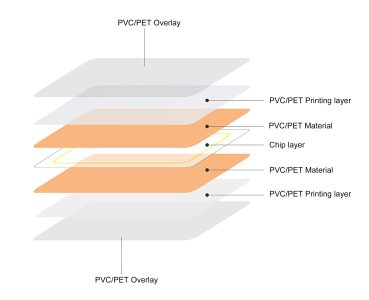
A smart card is essentially composed of credit-card size plastic card with a small printed circuit and an integrated circuit (IC) chip embedded on the card. In most cases the card is powered from the device it connects to. The capability of a smart card is defined by its integrated circuit chip.
Common smart card applications include:
- ATM cards (debit and credit cards)
- ID cards.
- Passports.
- PIV/CAC cards.
- SIM cards.
- Bus passes.
- Access badges.
- Electronic wallets.What is smart card and its advantages?Smart cards are designed to be tamper-resistant and use encryption to provide protection for in-memory information. Cards with microcontroller chips can perform on-card processing functions and manipulate information in the chip’s memory.Which are the two 2 advantages of smart cards?
Smart cards provide ways to securely identify and authenticate the holder and third parties who want access to the card. For example, a cardholder can use a PIN code or biometric data for authentication. They also provide a way to securely store data on the card and protect communications with encryption.What are smart card applications in IoT?
To secure the IoT server, smart cards can be used to authenticate logins. The encryption capabilities of smart cards are ideal in this situation because secure key management is necessary. There are also security elements embedded in the IoT devices that function on smart card technology.
What is the difference between a smart card and a memory card?
Smart card chips (ICs) can be as small as the tip of a pen, allowing integration in small devices. Unlike passive devices (such as a memory card or magnetic stripe card) that can only store information, the microprocessor smart card is active and able to process data in reaction to a given situation.
What is the storage capacity of a smart card?
Smart card has a micro processor that allow to add data . Smart card can hold 2000 to 8000 electric bytes of data. But the capacity of a smart card is 1 kilobytes to 256 kilobytes.

source: new york times